
If you have been investing in Southern California, you already know the challenge: prices are high, competition is intense, and finding cash-flow-friendly rentals can feel like a grind. That is a big reason more investors are looking inland at places like Tehama County, where entry prices are far lower and the rent-to-price math can look more attractive. In this guide, you will see why Tehama County has started to draw attention, what types of rentals fit the market best, and where you need to stay disciplined before you buy. Let’s dive in.
Why Tehama County Gets Attention
For many SoCal investors, the appeal starts with price. Zillow data for March 2026 shows an average home value in Tehama County of $318,464 and a February 2026 median sale price of $326,167. That is dramatically lower than the median sale prices Zillow reports for Los Angeles County at $864,000, Orange County at $1,123,167, and San Diego County at $873,333.
That lower price point changes the conversation. Instead of stretching to make a coastal rental pencil out, you may be able to buy at a basis that gives you more room for income, repairs, and reserves. For investors focused on yield first, that matters.
Why the Rent Math Looks Better
The headline reason many investors look inland is simple: gross yield screens better. Using Zillow’s current asking rent and median sale price, Tehama County comes in at roughly 5.2% gross rent yield, compared with about 3.9% in Los Angeles County, 3.4% in Orange County, and 3.9% in San Diego County, based on the same source data from Zillow.
That does not mean every deal works. Gross yield is only a first-pass screen, not a full cap-rate or cash-on-cash analysis. Still, it helps explain why Southern California money is willing to look at a smaller inland county.
There is another useful signal in the rent data. Census QuickFacts reports median gross rent of $1,159, while Zillow’s March 2026 asking-rent figure is $1,424. That suggests current asking rents are running above the county’s long-run Census median, which can be helpful context when you underwrite rental income.
What the Local Rental Market Looks Like
Tehama County is not a dense urban apartment market. Census data shows a July 2024 population of 64,451, with 24,526 households and an owner-occupied rate of 67.6%. That implies a renter share of roughly 32.4%, which points to a smaller, more rural rental environment.
That matters because your expectations should match the market. You are not buying into a giant coastal renter pool with deep multifamily demand at every price point. You are entering a more limited market where product type, condition, and local management can make a major difference.
Vacancy data also tells a balanced story. Tehama County’s housing element reports an overall vacancy rate of 11.6%, but a 4.6% rental vacancy rate, which it notes is close to the 5% benchmark it considers acceptable, according to the county’s 2024-2029 Housing Element draft. In plain terms, the rental market does not look obviously oversupplied, but it is also not a market where you should assume every unit leases instantly.
Which Rental Properties Make Sense
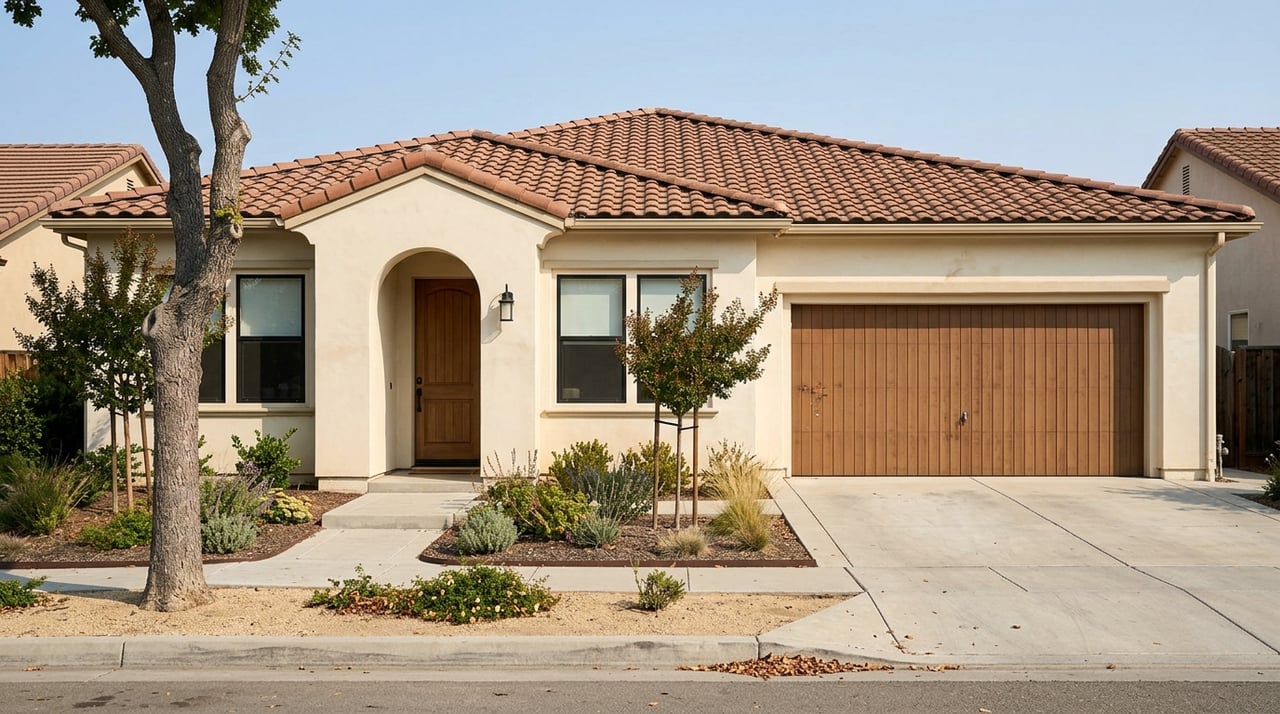
If you are coming from Los Angeles or Orange County, it helps to reset your mental model. In Tehama County, the most realistic investment product is not a large apartment complex. The county housing stock is dominated by detached single-family homes, especially in the unincorporated area.
According to the county’s housing element, 71.8% of units in the unincorporated area are single-family detached, while 23.8% are mobile homes or other manufactured housing. By comparison, 2-4 unit buildings account for just 1.6% and 5+ unit buildings for 1.1%.
Recent construction follows the same pattern. From 2019 to 2024, the county recorded 228 single-family residences, 107 mobile homes, 36 ADUs, and only one duplex. That gives you a pretty clear read on what this market naturally produces and absorbs.
Best-fit asset types
The most plausible rental plays in Tehama County include:
- Single-family rentals
- Manufactured homes
- ADUs
- Duplexes and small multifamily
That list lines up with both the county’s housing mix and renter household sizes in the unincorporated area, where many renter households are one-person or two-to-four-person households, according to the same housing element report.
Why Tehama Can Fit Income-First Investors
For a Southern California investor, Tehama County can make sense if your thesis is income first, appreciation second. The biggest draw is not that this is a fast-moving appreciation market. The stronger argument is that lower acquisition costs can create a better gross-income spread than many coastal rentals.
That is consistent with broader inland California trends. Northmarq’s Q1 2025 Central Valley multifamily report notes that regional cap rates were generally in the 5% to 6% range, with many transactions concentrated in 1970s and 1980s Class B/C properties in the $1 million to $10 million range. The same report also notes that transaction counts remained well below the 2020-2021 peak and flags rising insurance costs as an ongoing concern.
That supports a practical takeaway: inland California can appeal to buyers who want yield, but the deal set is often older, smaller, and more management-heavy than many coastal investors expect.
Where Investors Need to Be Careful
The numbers may look better at first glance, but Tehama County is not a passive-market shortcut. You need to underwrite the tradeoffs honestly.
Slower liquidity
This is a market with moderate liquidity, not deep liquidity. Zillow shows 251 homes for sale and a median 37 days to pending as of March 2026, while Redfin reports a February 2026 median sale price of $332,000, 52 median days on market, and 35 sales for the month.
That means fewer comps, fewer transactions, and potentially longer resale or leasing timelines than tighter metro markets. If you need quick exits every time, this market may test your patience.
Older housing stock
The county’s housing inventory is relatively old. The housing element says 62.6% of unincorporated units were built before 1989, and the building department estimates roughly 60% may need some type of rehabilitation.
For value-add investors, that can create opportunity. It also means you should be conservative with repair budgets, maintenance assumptions, and capital reserves.
Insurance and climate exposure
This is one of the biggest issues to take seriously. Redfin’s market page, based on First Street data, flags Tehama County as a major flood-risk area and severe wildfire-risk area.
Insurance costs, property hardening, and long-term maintenance can all affect your returns. If you are an absentee owner buying from Southern California, this part of your underwriting cannot be an afterthought.
Rural infrastructure issues
Some communities in the county rely on septic systems and private wells, according to the county’s housing element. That can affect inspections, repairs, lender requirements, and ongoing ownership costs.
If you are used to standard city utilities, make sure you understand exactly what the property needs before you close.
How to Underwrite More Conservatively
If you are evaluating a Tehama County rental, a conservative approach can help you avoid overestimating performance.
Start with realistic rent assumptions. HUD’s FY2026 fair market rent schedule shows benchmarks of $1,038 for a 1-bedroom and $1,362 for a 2-bedroom unit in Tehama County. These figures are useful as a lower, program-oriented benchmark when you compare them with current asking rents.
Then stress-test the deal for the factors this market is known for:
- Longer leasing or resale timelines
- Higher maintenance on older homes
- Insurance variability tied to flood and wildfire exposure
- Septic, well, or rural utility costs where applicable
- Property management needs for out-of-area owners
The goal is not to talk yourself out of a good deal. The goal is to make sure the deal still works after you account for the operational realities.
What This Means for SoCal Buyers
If you are a Southern California investor, Tehama County can be attractive because it offers a different path than the coastal model. Instead of chasing appreciation at a high basis, you may be able to buy lower and target stronger income spread from day one.
But that opportunity usually comes with more hands-on work. This is a market where property type, condition, hazard exposure, and local operations matter as much as the purchase price. The investors who do best here are usually the ones who stay disciplined, buy with margin, and plan for the true cost of ownership.
If you want access to off-market, value-add, and investor-focused opportunities with a team that understands how to evaluate deals through a speed-and-certainty lens, connect with Acquire’d Real Estate. Whether you are looking to expand beyond SoCal or want help sourcing your next income-first opportunity, the right local strategy starts with the right numbers.
FAQs
Why are Southern California investors looking at Tehama County rentals?
- Southern California investors often look at Tehama County because entry prices are far lower than in Los Angeles, Orange, or San Diego counties, while simple gross-yield screens can look more favorable based on current Zillow rent and sale-price data.
What property types are most common for rentals in Tehama County?
- The most common and realistic rental property types in Tehama County are single-family homes, manufactured homes, ADUs, and small multifamily properties like duplexes, based on the county’s housing stock and recent construction patterns.
Is Tehama County a strong cash-flow market for California investors?
- Tehama County can look stronger than many coastal California markets on a gross-yield basis, but you still need full underwriting because gross yield does not include expenses like repairs, insurance, vacancy, and management.
What risks should investors consider before buying rentals in Tehama County?
- Investors should account for slower market liquidity, older housing stock, possible rehab needs, wildfire and flood exposure, insurance costs, and rural infrastructure issues such as septic systems or private wells in some areas.
How should investors estimate rent in Tehama County?
- Investors can compare current asking-rent data with conservative benchmarks like HUD fair market rent and local Census rent figures, then stress-test for vacancy, turnover, and property condition before finalizing their underwriting.